
The Problem No Builder Can Ignore: Sliding Door Track Failures
Sliding door tracks take a beating on construction sites. They’re installed early, exposed for months and sit directly in the path of foot traffic, wheelbarrows, bins and heavy loads. When tracks bend, fill with debris or get hit repeatedly, doors begin to grind, jam or fall off their runners. This is the moment that creates defects, delays and WHS risks that no builder wants to deal with.
Most failures come down to two things: impact damage and debris build up. Even small dents or height discrepancies can push a door out of alignment. Debris like concrete, grout, sand and dust packs into the channels, forcing rollers to ride over uneven surfaces until the door jumps or drops. Add in makeshift timber ramps that slip, bounce or break, and the risk multiplies.
Builders have relied on improvised ramps for years, but they’re rarely effective especially on large sites with dozens of door openings. They don’t protect the track, they don’t stop debris and they’re unsafe under load. This is where TOUGHTRACKS changes the game.


A Purpose Built Solution for Real World Construction Sites
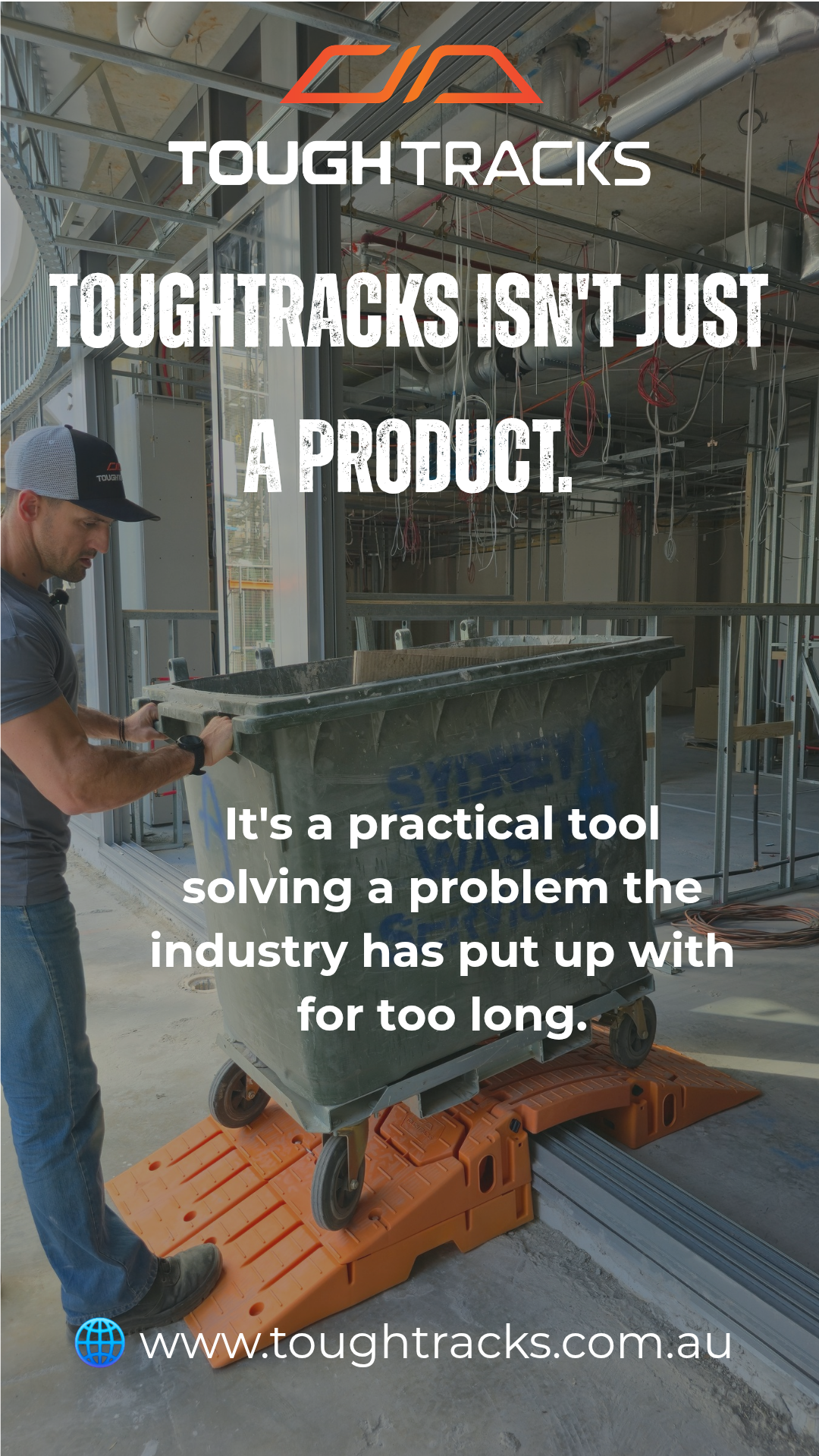
TOUGHTRACKS ramps are designed for ease, portability and everyday site use. They bridge over sliding door tracks without touching them, creating a smoother, safer access way for workers. Instead of relying on timber offcuts or scrap materials, builders can hand TOUGHTRACKS to their trades and let them move them ramps as their work moves. It's a simple, reliable way to eliminate impact damage and reduce injury risk.
Alongside the ramps, TOUGHTRACKS track covers protect the full width of the track from debris. Their hard outer shell blocks impact, while the soft fabric interior sits gently against the track. Once installed, they stay in place for the entire build a true set‑and‑forget solution that keeps tracks clean, straight and defect‑free.


Protecting Tracks Before They’re Damaged
When ramps and covers are used together, sliding door tracks stay safe from wheelbarrows, bins, trolleys, steel cap boots and general site activity. Doors glide properly, defect disappear and handovers become smoother. Builders save time, avoid rework and remove one of the most common sources of frustration on site.
TOUGHTRACKS isn’t just a product. It’s a practical tool that solves a problem the industry has put up with for too long. If you want to prevent sliding door failures and keep your site WHS‑aligned from day one, TOUGHTRACKS is the simplest and most effective way to do it.
The Cost of Repairs or Injuries
Across the industry, repair data shows just how costly this problem is. A damaged sliding door track can cost anywhere from $600 to $2,500 to repair depending on the system and if the frame is pulled out or the surrounding finishes are affected, the cost can climb above $5,000. On multi‑unit projects, even a handful of damaged tracks can blow out budgets and delay occupations. And when a worker is injured because a door falls or a makeshift ramp slips, Safe Work Australia reports the average slip, trip or fall claim costs $18,479 — not including lost time, investigations or project disruption.